
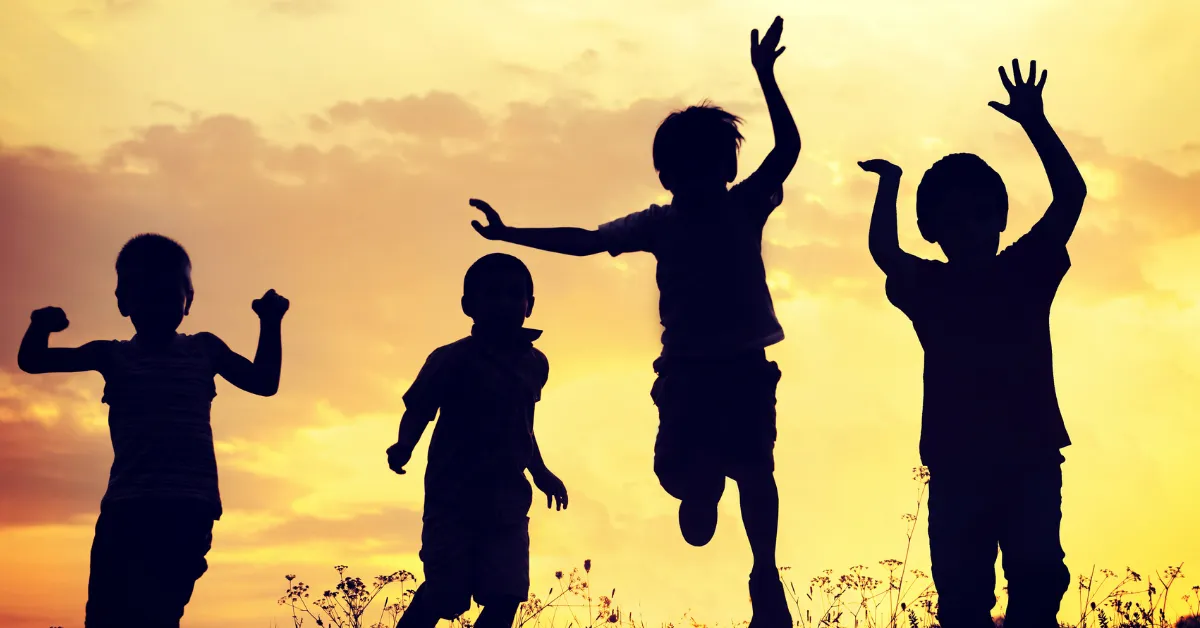
Free play helps address many problems of today’s world: children’s poor physical fitness, rising anxiety and loneliness. But there is one more reason for children to have time to play, and for them it is often the most important: joy.
Think back to your child’s last birthday party. After the cake, the children start chasing each other around the flat or the garden. Their cheeks are flushed, they shout, they laugh and they don’t hear anyone calling them. For a moment, nothing exists for them except the game.
Where does all this joy come from?
Being in the moment
When children play together, they become completely absorbed in what they’re doing. They enter a state of full engagement, known as “flow”, in which they lose track of time.
Spontaneity
Group play has no script, so it is full of mishaps and funny moments. Laughter is contagious, and fooling around together creates a carefree mood.
Belonging
Playing together gives children a sense of being part of a group. It’s a big source of happiness for them.
Movement and thrills
Running, chasing and active games give children a thrill. Moving around with friends gives them energy and makes them happy.
Freedom to express themselves
In play children can express their emotions freely. They can be silly, loud and expressive without worrying that someone will tell them off.
You can read more about how play affects children’s activity and mental health in our articles “Free play means plenty of movement” and “Lack of free play: one of the main causes of the mental health crisis in children”.