
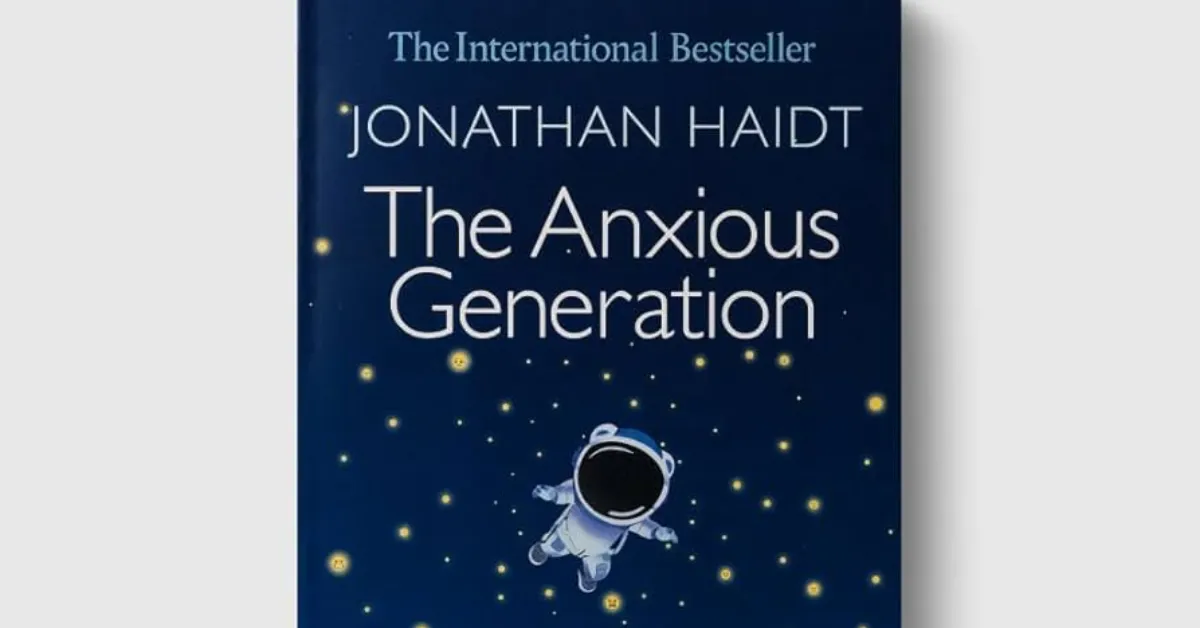
Jonathan Haidt is a social psychologist at New York University. For years he has studied moral psychology, social behaviour and how childhood is changing. His book “The Anxious Generation” has sparked a worldwide debate about why, since the early 2010s, the number of children and teenagers with anxiety and depression has grown so fast. Haidt describes a big shift: a play-based, independent childhood has given way to a “phone-based childhood” that keeps children indoors, sitting still and alone.
The book describes the problem and proposes how to rebuild a childhood that protects mental health. Free play is one of its main themes.
What free play gives children
Free play is play that children make up and start themselves. Haidt writes that young mammals, humans included, need this kind of play to develop the skills they will need as adults. In free play children learn to:
- handle conflicts with other children
- take risks that match their abilities
- solve problems without adult help
- build confidence and independence
- cooperate, invent and lead others
This is how children build resilience. When they test themselves in the real world, they find out that they can cope with uncertainty and bounce back from small failures. They also form stronger friendships and feel that they belong.
What happens when free play disappears
Free play has been replaced by screen time and activities run by adults. Many children now spend more time with their phones than with other children face to face. And when they do have activities, adults usually run them, with rules, timetables and safety regulations.
Haidt describes this as a shift from “discover mode” to “defend mode”:
- Discover mode: curiosity, exploration, confidence.
- Defend mode: caution, avoidance, anxiety.
Without time to explore the world on their own, children are more fragile and less prepared for life’s setbacks. Instead of learning from real experiences, they try to build relationships through a screen. This often increases fear, loneliness and comparison with others.
The loss of free play, together with the rise of social media, is one of Haidt’s main explanations for why anxiety among young people rose sharply just as smartphones became universal.
What Haidt proposes
More free play
Give children space and freedom to explore the world, take safe risks and play with other children without constant adult control.
No smartphone before high school
Children first practise social skills in the real world, and only then enter the digital one.
Social media from age 16
By that age, children are better able to manage their emotions.
Schools and neighbourhoods that support independence
More breaks, more time outdoors and more places where children can meet and play.
More trust in children
Less supervision. Children settle their own conflicts.
Haidt writes that this is a collective problem that parents can’t solve on their own. Schools, local authorities and policy makers need to change too.
In our article “Taking children’s smartphones away is not enough” we look at what happens when a child’s phone is taken away and nothing is offered in its place.