
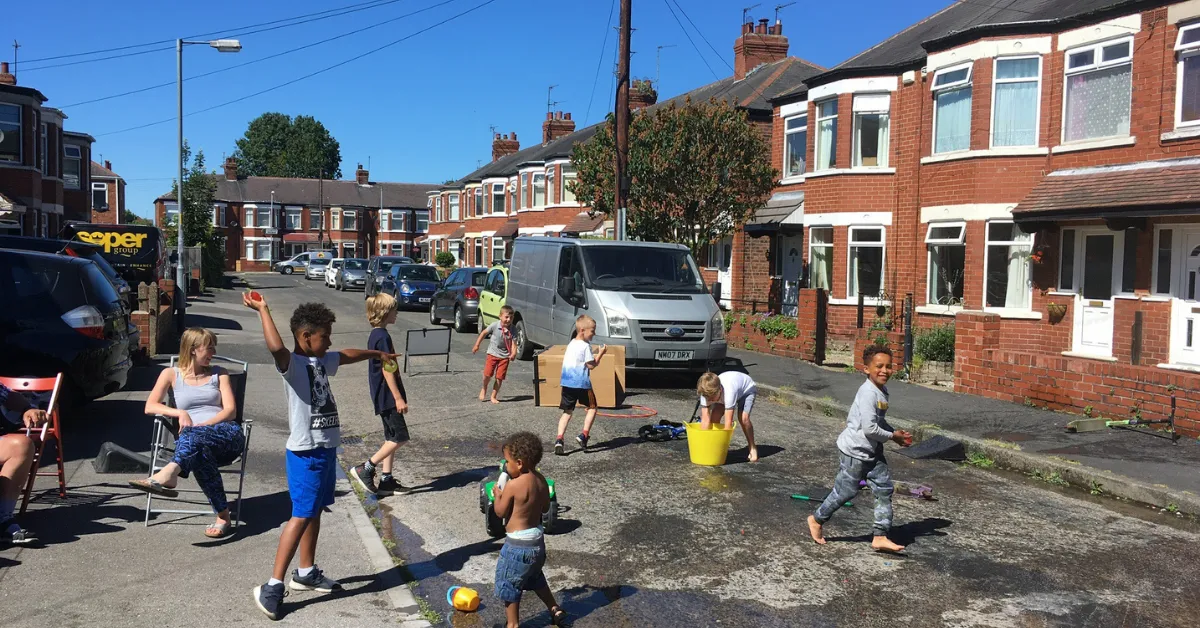
In many British towns and cities, the way housing is laid out makes free play hard. Houses usually have small, fenced gardens, so each child plays on their own patch of lawn. The street, which used to be a natural playground, now belongs to cars and delivery vans. Many families have no safe place near home where children could go out, meet the neighbours and play.
That was also the case on one street in Bristol. In 2009 two mothers, Alice Ferguson and Amy Rose, decided to test a simple idea. If a street can be closed for a street party, why not close it for a few hours just so children can play safely?
It worked. In June 2009 around 30 children of different ages came out onto the street with bikes, scooters, chalk and skipping ropes and simply played. Adults stewarded the ends of the road, neighbours chatted, and for a few hours the street became a shared space. The organisation Playing Out grew out of that experience.
From one street to a social movement
The local experiment quickly spread. The Play Street model offered two things that were missing: a place close to home where children could move around safely, and a chance for neighbours to get to know each other.
By the late 2010s hundreds of communities across the UK were organising these events. Playing Out produced guides, template documents and legal advice to help residents apply for temporary road closures. Some local councils set up permanent schemes to support these initiatives, which made it easier for more neighbourhoods to join in.
At Play Street events children ride bikes and scooters, draw with chalk, make up games or just run around together. All it takes is a stretch of safe tarmac and permission for children to play their own way. Playing Out stresses that these are not organised activities: there are no coaches, no timetable and no expensive equipment.
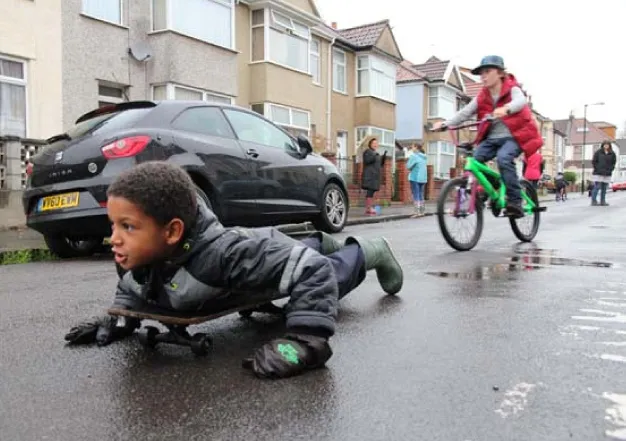
A Play Street organised with help from Playing Out
What Play Street events bring
Children can run around, explore their area and get to know other children from the neighbourhood, often for the first time in a long while. Adults get to know their neighbours better and feel they share responsibility for their street. As more of life happens behind closed doors, these afternoons make room for ordinary, spontaneous encounters.
The model is cheap. It takes a few cones or wheelie bins as barriers, a few volunteers and a little coordination between neighbours. Guides for residents and councils are available at playingout.net.