
The space around us shapes how we live and behave. It also shapes whether and how children play. Homes, streets and public spaces can make it easier for children to meet, or harder.
Łukasz Liebersbach, founder of Play Drive, saw this when he lived in the UK. Gardens there are often separated by high fences. Each child has their own patch of lawn to play on, but is cut off from the children next door.
One day a strong wind during a storm knocked down one of the fence panels between two houses. A gap opened up, and suddenly the children from both gardens could meet. Within minutes they were playing football together. Nobody had planned it. The space simply allowed it.
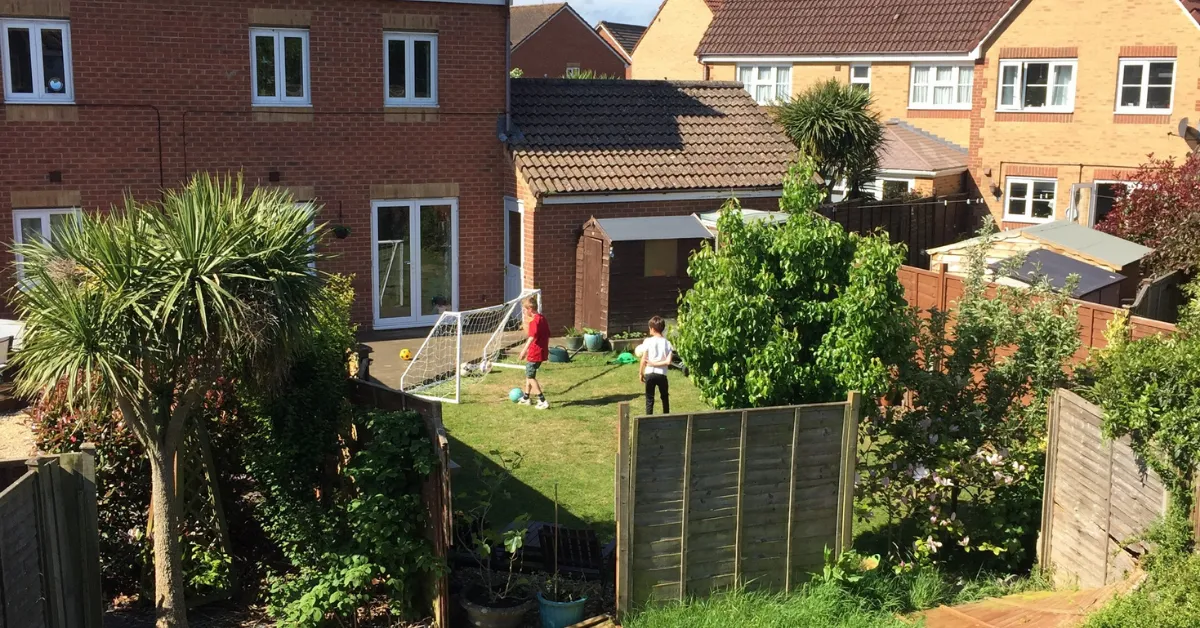
Children brought together by a fallen fence
Design decisions can close off or open up chances for contact and play. How we lay out streets, courtyards and neighbourhoods can encourage spontaneous play or stifle it.
A good example is Marmalade Lane in Cambridge, UK, a neighbourhood designed with community and play in mind. It shows what is possible when architecture supports children’s natural needs. There are no expensive playgrounds there. There are three simple design decisions.
1. A street for people
The most important decision was simple and bold: cars don’t come into the heart of the neighbourhood. Parking is on the edges, and the main lane has become a safe, wide space for play. Front doors open straight onto it. Children play games and ride bikes here, and neighbours meet without worrying about cars. This is where the life of the neighbourhood happens.
2. Windows onto shared space
The houses face each other and look out onto shared gardens and green space. It’s a classic design principle: adults can glance out of the window at children playing without getting involved. Parents feel more at ease, and children gain confidence and independence.
3. A shared meeting place
At the centre of the neighbourhood are a common house and shared gardens. They are a place to play on rainy days and a natural meeting point for neighbours. As a result, neighbours know and help each other, a bit like in a village.
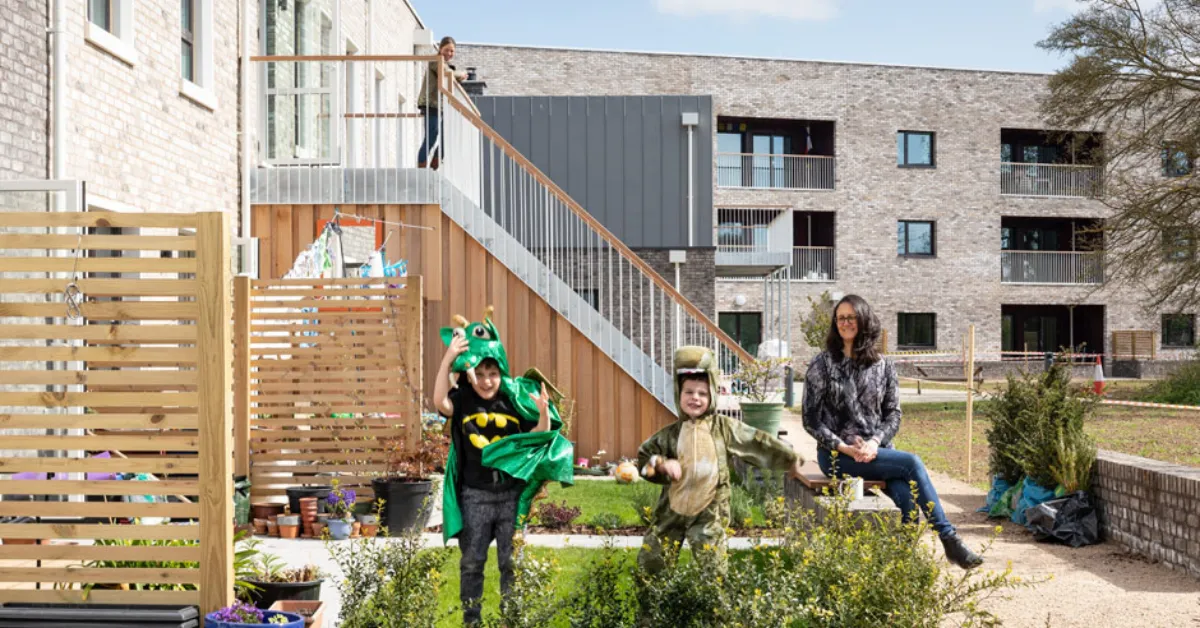
Marmalade Lane encourages free play
The lesson from Marmalade Lane is simple: supporting free play doesn’t take more toys or activities. It takes safe spaces where neighbours know each other. Space for play is worth planning into every new housing development and every courtyard redesign. This is a job for urban planners, developers, housing cooperatives and local authorities.