
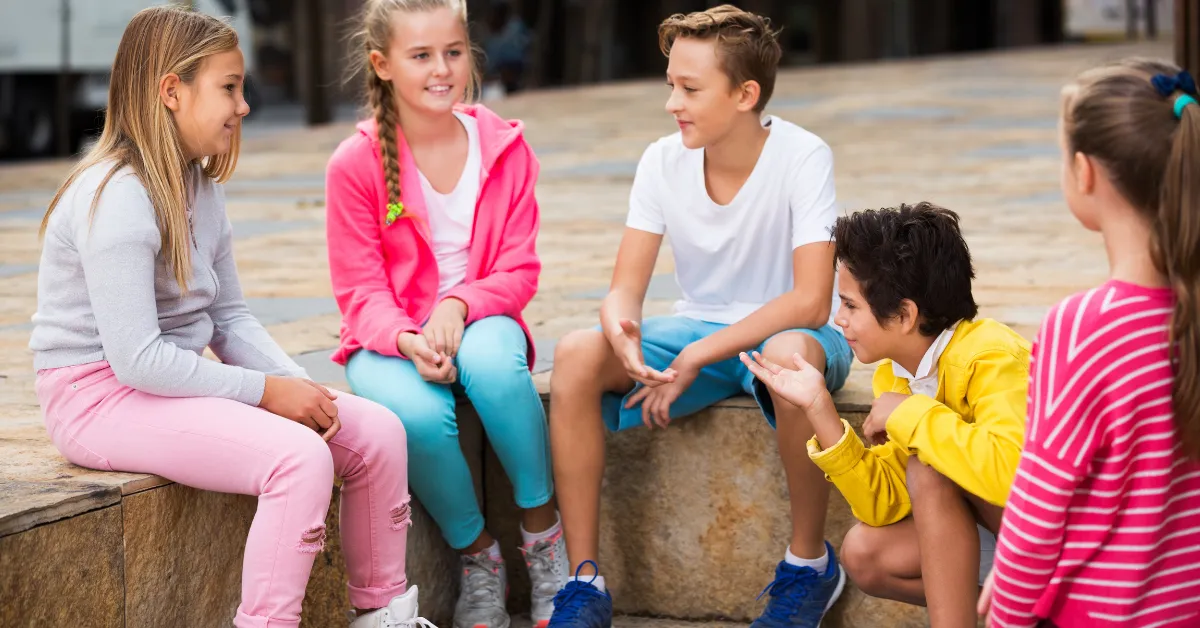
Many young people today turn to adults and institutions to solve their problems and conflicts for them. One reason may be a lack of play with other children while they were growing up. It is in this kind of play that children learn to deal with others.
Free play, in which children play without adults taking part, teaches cooperation, negotiation and resolving conflicts. Organised activities often focus on the result. In free play, what matters is keeping the game going. Children change the rules and give younger or weaker players a head start so that everyone can play.
Free play is also egalitarian: any child who doesn’t like something can simply walk away. So the others have to pay attention to everyone else and compromise if they want to keep playing.
Imagine your child is playing football with friends outside. The youngest keeps losing and threatens to go home. There is no referee or coach, so the older children have to come up with something themselves: they put him on the stronger team or let him shoot from closer in.
Research supports this. Findings published in the “Journal of Play” in 2014 show that children who play freely are better at understanding other people’s points of view and at resolving conflicts. Research on other mammals, such as primates, also shows that play helps the young learn to live in a group and build relationships.
Parents can support this by leaving children a free afternoon with their friends and not stepping into every argument. You’ll find more practical ideas in our article “Don’t let a little mess stop a playdate”.