In [month] [year], at the Back-to-School event at Capgemini in Wrocław, Play Drive ran a workshop for parents and carers. It was led by Łukasz Liebersbach, founder of Play Drive. We talked about a question that easily gets lost in the daily rush: do our children have enough time for ordinary free play that they start themselves, without adults constantly around?
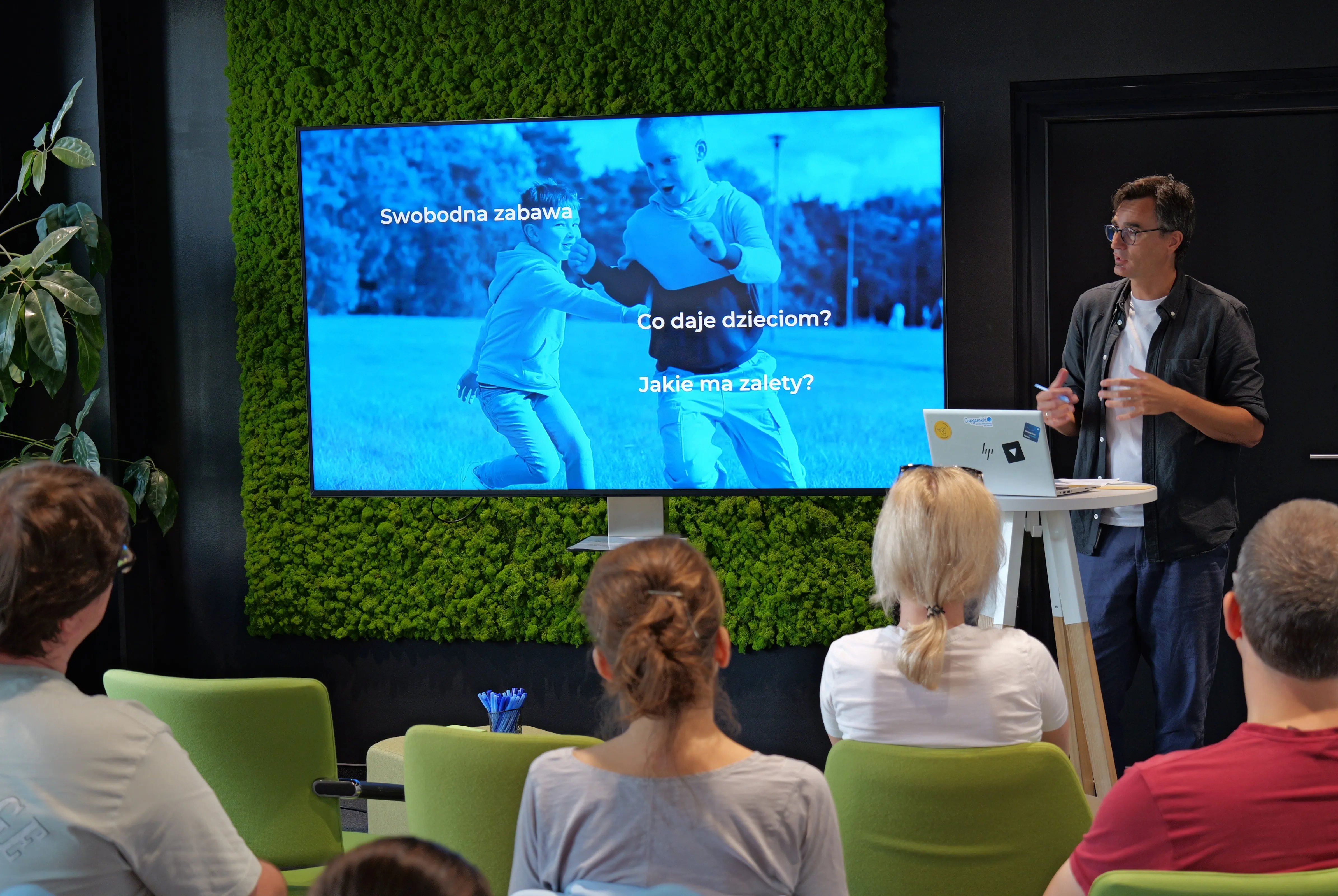
Łukasz Liebersbach / Play Drive
We began with the basics: what play is, why it exists and how it helps us adapt to the world. We looked at its origins in the animal world, especially among mammals, where play builds strength, coordination, social skills and flexibility. It’s similar for humans. Through play, children prepare for life.
The most interesting part was hearing from the parents themselves. We asked why free play matters. They answered:
- “It teaches children independence.”
- “It’s how they explore the world on their own.”
- “They learn to get along with others without us stepping in.”
Then came the harder part. Free play has been declining for decades. Parents talked openly about why:
- overloaded schedules with hardly any room for spontaneous play
- neighbourhoods where people don’t know each other
- worries about safety and traffic
- and something very important: a tendency to over-control children’s time and activities
Then we looked at the bigger picture. As free play declined, mental health problems among young people grew. Many participants said we are losing something important.
Still, the meeting ended on a constructive note. Parents shared practical ideas for bringing free play back:
- invite the neighbours’ children over, without any special plan
- go away with other families so the children can play together
- give children more free time with friends
- post in parent groups when you’re heading to the playground
The workshop also sparked honest conversations between parents. Questions came up that many of us struggle with:
At what age should a child be allowed out alone? When should they get a smartphone? Which apps are suitable?
These conversations showed that parents need support, contact with other parents and a chance to share experiences. You can read more about making it easier for children to get together in our article “Don’t let a little mess stop a playdate”.